
What if the biggest driver of condo prices in The Gulch isn’t a new restaurant or a skyline view, but the interest rate on your loan? If you are weighing a high‑rise purchase or sale, you already feel how payments, qualifying power, and investor returns shift when rates move. In this guide, you will see how mortgage rates ripple through The Gulch’s condo market, what to watch locally, and simple math you can use to plan with confidence. Let’s dive in.
Why rates move condo prices
Purchasing power in The Gulch
For most buyers, monthly payment drives the budget. When rates rise, the same loan costs more each month, which lowers the maximum price you can afford. Here is a simple way to picture it using common 30‑year fixed payment factors per dollar of loan:
- 4.00% ≈ 0.004774 per $1 of loan
- 6.00% ≈ 0.005995 per $1 of loan
- 7.00% ≈ 0.006653 per $1 of loan
If you target about $2,500 per month for principal and interest, your buying power shifts a lot as rates change:
- At 4.00% your affordable loan is about $523,700, which supports a purchase around $654,600 with 20% down.
- At 6.00% your affordable loan is about $417,000, which supports a purchase around $521,300 with 20% down.
Result: a roughly 2‑point rate jump can trim maximum purchase price by about 20% for the same payment. This example excludes taxes, insurance, and HOA dues to show the pure rate effect. Your actual budget will be lower once those items are included.
If you want to track the broader rate trend, the weekly 30‑year fixed average is published in the Freddie Mac Primary Mortgage Market Survey.
Investor math and cap rates
Investors price property using net operating income and cap rates. Higher mortgage costs increase required returns, which often pushes cap rates up and prices down. For example, if a condo’s net operating income is $30,000:
- At a 5% cap rate the price is $600,000.
- At a 6% cap rate the price is $500,000.
That shift equals about a 16.7% price drop. If debt is part of the deal, higher rates also raise debt service, which squeezes cash flow unless rents grow enough to offset the increase.
Buyer psychology and pace
Rising rates usually reduce the number of qualified buyers and cool bidding behavior. You tend to see longer days on market and more negotiability. In The Gulch, limited supply can cushion prices at times, but fewer active buyers can still change the pace and terms of a sale.
The Gulch factors to watch
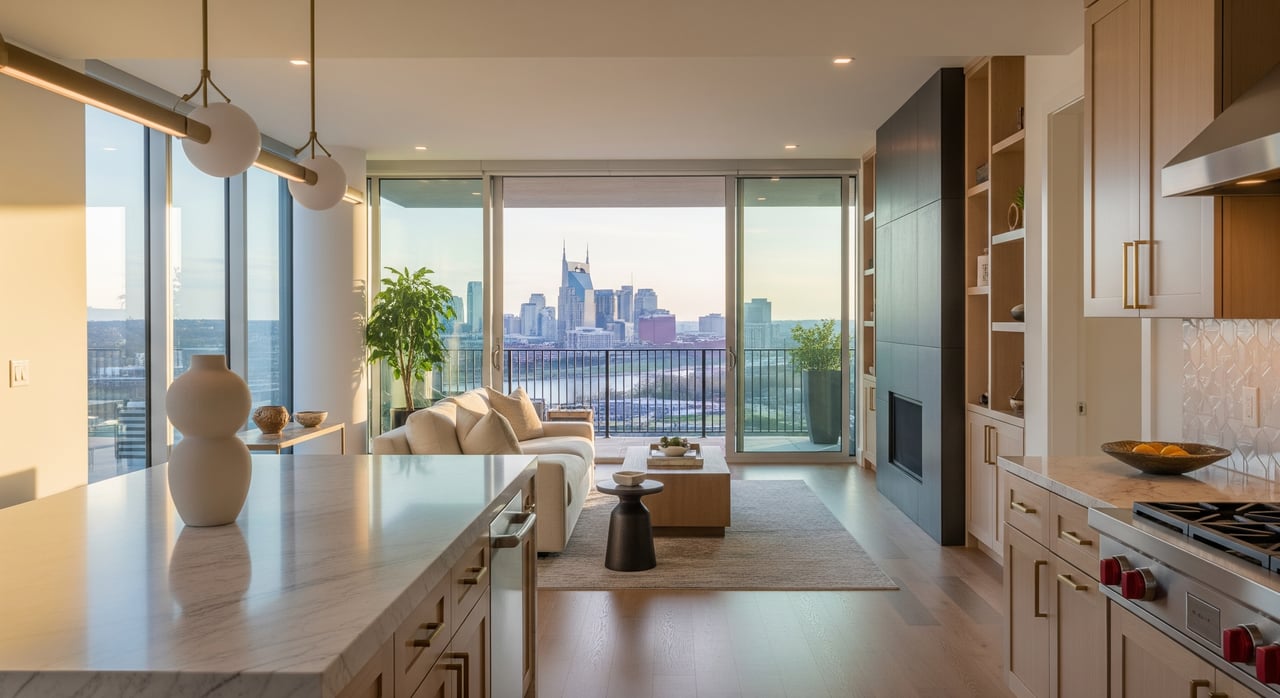
The Gulch is a dense, amenity‑rich, mixed‑use neighborhood with a high concentration of mid‑ and high‑rise condos. That mix creates some unique rate sensitivities.
HOA dues and total payment
Lenders include HOA dues in your debt‑to‑income and monthly housing payment tests. Higher HOA dues reduce the loan you qualify for at any given rate. Because many Gulch buildings offer robust amenities, you should budget HOA dues alongside principal, interest, taxes, and insurance when testing affordability.
Financing rules by building
Condo financing depends on project eligibility. Agency lenders set rules on things like owner‑occupancy ratios, reserve funding, and single‑owner concentration. If a building does not meet those criteria, buyers may need portfolio or jumbo loans that often carry higher rates and larger down payments. You can review agency standards in the Fannie Mae Selling Guide for Project Standards and the Freddie Mac Guide section on Condominium Projects. For FHA‑backed options, search the HUD/FHA condo approval list by building.
Insurance and assessments
Urban condo associations carry building insurance and sometimes wind or flood coverage. Rising premiums, plus any special assessments, flow into your monthly costs. When rates are elevated, those added costs make payment sensitivity even more pronounced.
What a 1% rate change means
A 1% move can alter both payments and price points in practical ways.
Payment impact for a $600,000 loan:
- At 6.00% the monthly principal and interest is roughly $3,597.
- At 7.00% it is roughly $3,992.
- That is about a $395 per month difference.
Buying power for a fixed payment target:
- With a $2,500 monthly budget for principal and interest, the affordable purchase price at 4.00% with 20% down is about $654,600.
- At 6.00%, the affordable purchase price falls to about $521,300.
These examples show direction and scale so you can plan. Your specific numbers will vary with down payment, HOA dues, taxes, insurance, and the exact product you choose.
How this plays out in The Gulch
For owner‑occupiers
If you plan to live in your condo, rate changes mostly affect what you can comfortably spend now. The Gulch’s premium per square foot, plus HOA dues, means monthly budgeting is essential. Decide whether your top priority is the payment or the total price. If you will hold long term, short‑term rate swings matter less than fit, location, and staying power.
Practical steps for owner‑occupiers:
- Get pre‑approved and include HOA dues in your target payment range.
- Stress test your budget with a small rate increase to avoid surprises.
- Explore tactics like rate locks, buydowns, or adjustable‑rate mortgages, and weigh tradeoffs. You can monitor the trend using the Freddie Mac weekly rate survey.
For investors
Higher rates raise your debt service and compress cash yields unless rents grow meaningfully. Focus on the inputs you can underwrite with confidence:
- Net operating income quality, lease terms, and realistic rent growth.
- Building eligibility for agency or portfolio financing and the cost difference across options.
- Scenario analysis for 1 to 2 percentage‑point rate increases to see effects on cash flow and exit valuation.
Cap rates also move with broader capital markets. For periodic context on nationwide trends, review the CBRE U.S. Cap Rate Survey.
Supply, demand, and fundamentals
Supply is naturally constrained in core neighborhoods with limited land and regulated development. That can support prices when demand is steady. At the same time, a new building delivery or conversion can quickly change the local balance of listings.
Demand in the Nashville metro has been supported by solid job and population growth over the past decade, which can cushion the impact of higher rates. For an overview of the local labor backdrop, see the BLS Nashville MSA “Economy at a Glance”. For local market snapshots, track the Greater Nashville REALTORS monthly market reports.
What to track each month
Use a simple checklist to stay ahead of rate‑driven shifts.
- 30‑year fixed mortgage rate trend: Freddie Mac PMMS
- Federal policy backdrop: Federal Reserve FOMC updates
- Condo inventory pace and days on market: local MLS or Greater Nashville REALTORS reports
- Rent growth and vacancy trends: local property management briefs
- New permits and building deliveries: Metro Nashville building safety and planning updates
- Your target building’s HOA dues, reserves, and any special assessments
Next steps for buyers, sellers, and investors
- Define your monthly comfort range first, then back into price. Include HOA dues, taxes, and insurance.
- If you are an investor, model conservative rent growth and test returns at multiple rate scenarios and cap rates.
- If you are a seller, presentation matters even more when rates are higher. Strategic pricing, high‑quality marketing, and small pre‑list improvements can tighten days on market and reduce concessions.
You deserve guidance tailored to The Gulch’s buildings and today’s rate climate. If you want a data‑driven plan and white‑glove execution, connect with Sam Gray Real Estate to schedule a consultation.
FAQs
How do mortgage rates affect Gulch condo prices?
- Higher rates reduce buying power, narrow the buyer pool, and can increase negotiability; limited supply and strong local job growth can cushion price shifts.
Do HOA dues make Gulch condos more rate‑sensitive?
- Yes. Lenders count HOA dues in your monthly debt‑to‑income calculation, which reduces the loan size you can qualify for at any given rate.
What does a 1% rate increase do to my payment?
- On a $600,000 loan, moving from 6.00% to 7.00% raises principal and interest by roughly $395 per month using standard 30‑year factors.
Are condo loans harder than single‑family loans in Nashville?
- Often. Project‑level rules on owner‑occupancy, reserves, and other criteria can limit eligible financing options and increase cost if a building is not agency‑approved.
Can rent growth offset higher rates for investors in The Gulch?
- Possibly, but it requires enough rent growth to cover higher debt service; prudent modeling with conservative assumptions and vacancy stress tests is key.